
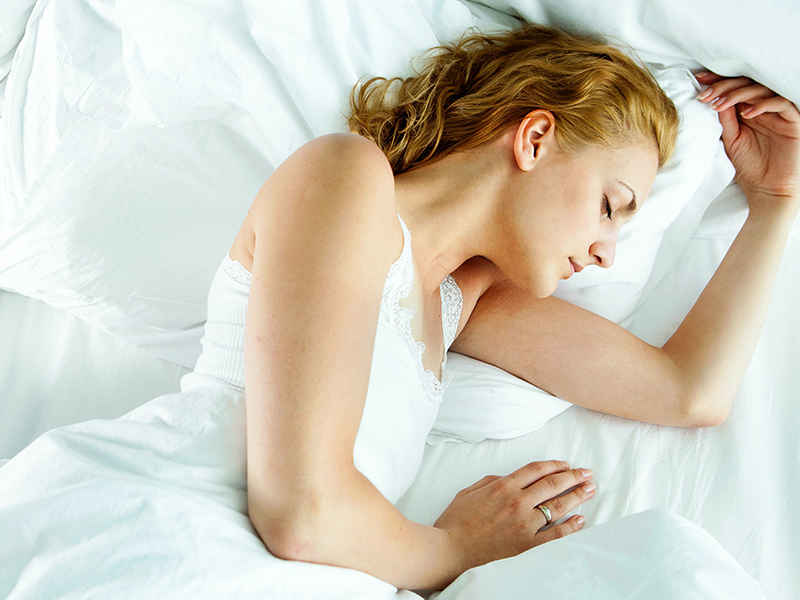
Snoring is a really common condition, and there are a number of reasons why people do it. To put it simply, it happens when parts of your throat vibrate while sleeping. Your muscles may over-relax, narrowing your airways and affecting breathing. This vibration makes a sound.
Sometimes, snoring can be a sign of sleep apnoea, a condition where breathing is interrupted during sleep. As you might imagine, when breathing gets affected long-term, it can have an impact on your overall health. Sleep apnoea is diagnosed by a doctor, often with a sleep study, so if you’re worried, see your GP.
However, lots of people snore at some point or another, even those without a condition. There are plenty of things that make it worse (or even increase the risks for people who don’t normally do it – yes, even you).
weight
Being overweight or obese can be a factor, since the added fat can add to the restriction in breathing by pressing against your throat and making it narrower.
alcohol
When we drink, our muscles relax. This is true in our throats as well as elsewhere in our bodies, which leads to even more vibrations and a louder sound. Try and avoid drinking close to bedtime if you know you’re a snorer.
mouth breathing
Are you a mouth breather? Bad news – you’re probably more likely to snore. Snoring is typically caused by walls at the back of the throat vibrating, not those used when breathing through your nose.
If you have a blocked nose, you may breathe through your mouth temporarily. This then increases your risk.
sleeping on your back
Positions make the difference when snoring is involved. When you sleep on your back, it makes your tongue fall back in a way that restricts airflow and increases the vibrations.
allergies
Bad news if you have hayfever or other allergies. Airflow is restricted in these cases, but taking a regular antihistamine as prescribed by your doctor could help.
smoking
Having a cheeky cigarette (or more) can really affect your breathing. Air struggles to get in and out, causing those pesky vibrations.
medications
Like alcohol, some prescription drugs may make your throat muscles relax. These can ironically include sleeping tablets – talk to your doctor about the right medications for you.
polyps & swellings
Narrowing of the airways can be caused by nasal polyps or thyroid swellings. If you have inflamed tonsils or adenoids, this can also be a problem.
pregnancy
Snoring is often more common in pregnancy, and there’s not a lot you can do. If the problem persists after you have your baby, talk to your GP or dentist.
anatomy
Unfortunately, some people were simply born with smaller airways than normal or a larger tongue, which increases the likelihood and severity of snoring.
not treating sleep apnoea
It sounds obvious, but if you have a condition known to make snoring worse, if you don’t treat it, the situation is unlikely to improve. If you think you might have sleep apnoea, see your GP, who can arrange a sleep study if needed.
it’s time to see a dentist
If you’re dealing with sleep apnoea, or even just severe snoring, a dentist may be able to help.
We use 3D scans of your teeth to create custom oral appliances made with SomnoMed. They change the position of your jaw to help open your airways, which can help you breathe better while you sleep. Find out more in how can dentists help with snoring?, and if it’s your partner who snores, read my partner’s snoring is so annoying.
book your scan now
To get your custom-fit appliance made, book a scan at our Edgecliff or Castle Hill clinic.
Find out more about snoring treatment at smilogy, or book a scan at our edgecliff or castle hill clinic.